Julije Klovic – Don Giulio Clovio de Croatia
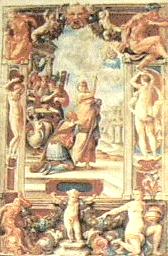
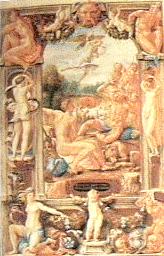
Julije Klovic, or Don Giulio Clovio de Croatia (1498-1578), is regarded as the last great representative of the classical European miniature. His works decorate many famous galleries: Uffizi in Florence, Museo di Capodimonte in Naples, Biblioteca Marciana in Venice, Galleria Sabanda in Torino, Bibliothek der Albertina in Vienna, Louvre in Paris, Towneley Public Library and Pierpont Morgan Library in New York (which is in possession of “Officium Virginis”, 228 pages, his most famous and the best masterpiece, containing 30 valuable miniatures by his hand), the British Museum and Soane’s Museum in London, Windsor Castle (Royal Library), Library of the John Rylands University in Manchester. His pupil was El Greco, who portrayed him in his work “Expelling merchants from the temple” (together with figures of Rafael, Michelangelo and Tizian, appearing on the bottom left of that work), now kept in The Minneapolis Institute of Arts (The Willam Hood Dunwoody Fund).


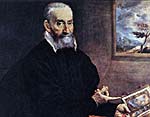
Among his friends let us mention Michelangelo. Klovic used to sign himself as
GEORGIVS JVLIVS CLOVIVS CROATA His grave is situated near Michelangelo’s Moses in the the church of S. Pietro in Vincoli, Rome, and bears an inscription “Pictor de Croatia”.
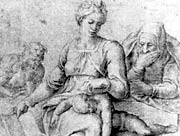
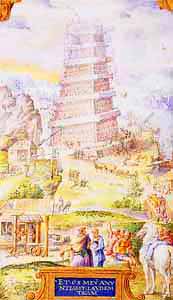
In Klović’s The Annunciation in an ornamental broder (kept in The
British Museum, London), he signed himself as “Do[n]
Giulio Clovio coruato“,
that
is, by clearly indicating his origin (coruato = Horvat
= Croat):

Do[n]
Giulio Clovio coruato
(i.e., Don Giulio
Clovio the Croat)

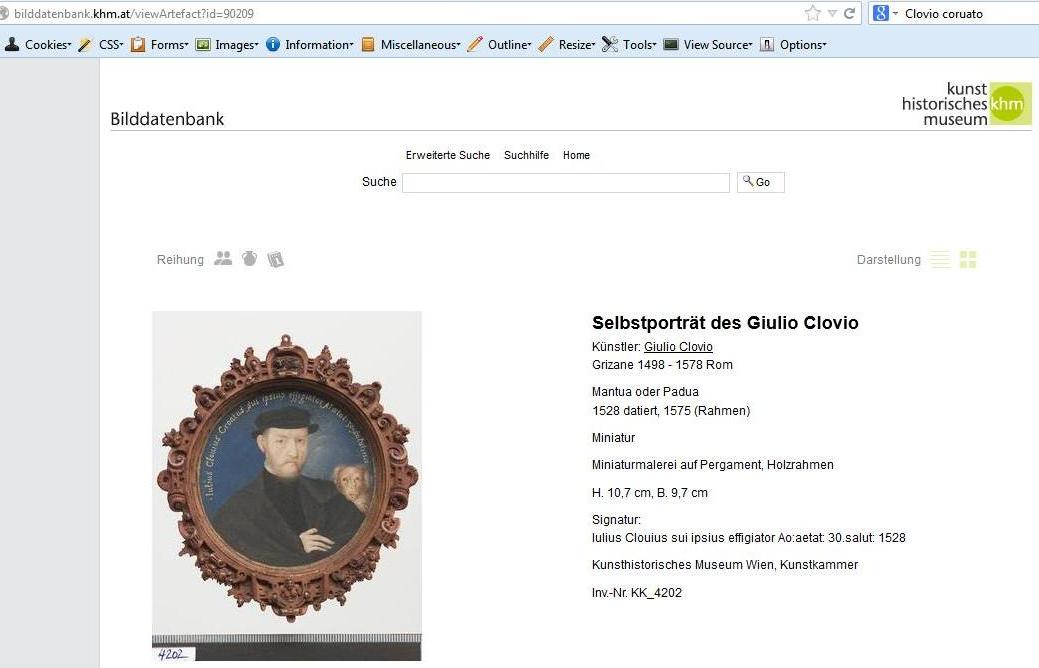
Selfportrait of young
Julije Klović from 1528, kept in Kunsthistorisches Museum in Vienna.
Text arround the upper
border:
Iulius
Clouius Croatus
sui ipsius effigiator
Ao:aetat: 30.salut: 1528.
 Selfportrait of young
Julije Klović from 1528, kept in Kunsthistorisches Museum in Vienna.
Selfportrait of young
Julije Klović from 1528, kept in Kunsthistorisches Museum in Vienna.
Text arround the upper
border:
Iulius
Clouius Croatus
sui ipsius effigiator
Ao:aetat: 30.salut: 1528.
Iulius Clouius Croatus
With
sadness we have to point a the following mistake made by the Kunshistoriches Museum in Vienna:
Iulius Clouius [sic!] sui
ipsius effigiator
Ao:aetat: 30.salut: 1528.

i.e., Croatus
has been omitted on the web page of the Kunsthistorisches Museum.
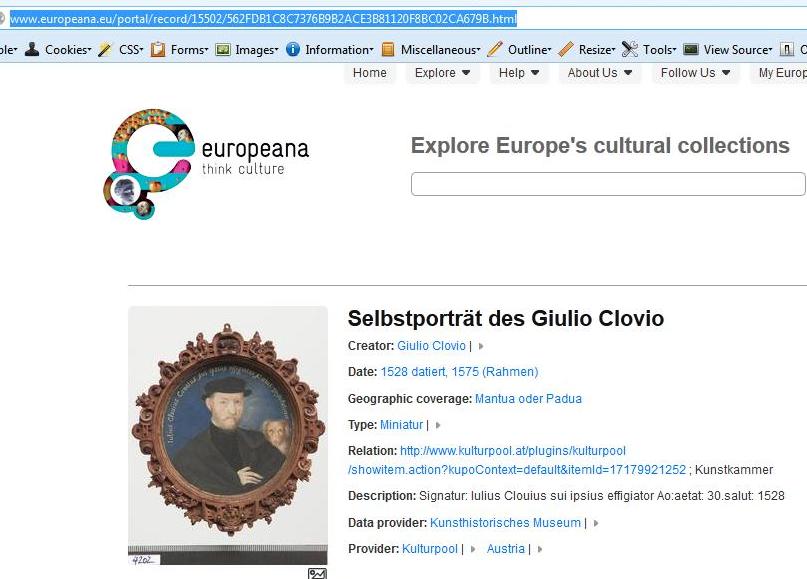
The same mistake can be seen on europeana.eu,
referring to Kunshitorisches Museum
as the data provider:

Noticed on 21 Jan.
2013, see JPG_kunsthistorishecs_museum,
JPG_europeana.eu
The
mistake at Kunsthistorisches Museum has been corrected in March
2014,
but at europeana.eu
it is still not corrected (as of
April 2014).
…

Iulio
clouio de crouacia
inuen
Inscribed at the bottom
of a print made by Cornelis
Cort, after Julije Klovic.
See Rijskmuseum,
the Netherlands.
In his works Julije Klović designated his origin
as Croata, Croatus, Crovata, Coruato, Corvatinus, Illyricus.
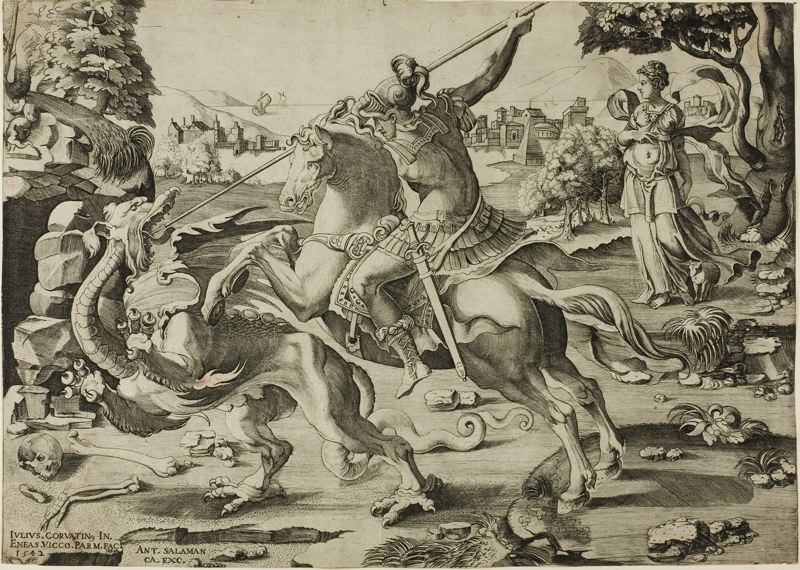
Iulius, Corvatin
(that is,
Iulius, the Croat), a masterpiece by Julije Klović created in 1542.
He signed himself with his national name on the bottom left. Kept in
the British Museum.

Iulius Corvatin (Corvatin
= the
Croat)
Giorgio Vasari in his monograph Life
of Giulio Clovio, published
in 1568, wrote the following:
Never
has there been nor is there any likelihood that there shall be, for
many hundreds of years, a more singular or more excellent illuminator,
or we may say painter of small things, than don Giulio Clovio, his
having proved to be far superior to all who have ever engaged in
painting in this manner.
For more information see Julio
Clovio Croata, protector del Greco Foven
by Branko Kadic, an
article by Marjana Vucic
published in American Croatian Review, [Julije
Klovic],
and [Fontes
Clovianae]